








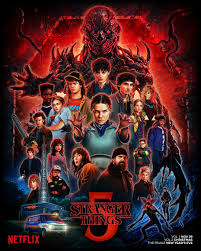
 It’s hard to believe that Stranger Things began with a missing kid, flickering lights, quiet unease, and has now officially reached its end. What started as a nostalgic, genre-blending experiment became one of the most influential television series of the modern era. With the final chapter complete, fans are left reflecting not just on a story well told, but on the closing of something much bigger.
From its earliest days, Stranger Things felt special. Filming began in 2015, and over the years, the show has grown alongside its audience. With an entire decade of filming, the actors and many viewers quite literally grew up with it, watching characters age, relationships change, and stakes rise season after season. In that sense, the show does not simply mark the end of a series; it marks the end of an era. Television rarely holds the same cultural grip for nearly a decade, and Stranger Things managed to do exactly that.
One of the show’s greatest achievements was how it blended genres without losing its emotional core. It balanced mystery, science fiction, horror, and heartfelt coming-of-age storytelling in a way that felt natural rather than forced. Without revealing any plot details, the real hook was never just what strange event might happen next; it was how the characters would respond together. Friendship, loyalty, courage, and growing up were always at the center, grounding even the most surreal moments.
 The series also became a cultural touchstone. Its aesthetic, music, and tone influenced fashion, film, and how nostalgia itself is portrayed on screen. It reminded audiences of the joy of weekly theories, shared excitement, and collective anticipation. In an age of endless content and constant releases, Stranger Things stood out as an event, something people experienced together in real time.
As the story comes to a close, there is appreciation for how deliberately it ended. Rather than stretching itself thin, the series chose a clear stopping point, preserving its identity and impact. That decision allows it to be remembered for what it was at its best, instead of what it might have become if it continued too long.
 While the main story is complete, there has been light discussion about a possible additional season or continuation years in the future. If it happens, it is expected to be more of a return to the world than a reopening of the original journey. Details remain minimal, and for now, it exists as a general idea rather than a promise.
In the end, Stranger Things leaves behind more than episodes; it leaves memories. It captured a moment in television history that began in 2015 and grew into a defining cultural experience. The show may be over, but its influence, characters, and emotional weight will linger long after the screen fades to black, reminding audiences why this ending truly feels like the close of an era. For countless fans worldwide, the series became a shared language, shaping conversations, creativity, friendships, and memories that will quietly endure across generations long after its final episode aired.