







Everyone loves Thanksgiving. The food, the family gatherings, everyone pitching in for a good feast. But some people think differently about the history of the holiday. Some remember it for the feast, others mourn over what happened on that day in history.
The history of Thanksgiving is complex, rooted in a 1621 harvest feast between Wampanoag people and English colonists, but also marked by colonization, violence, and oppression. While the 1621 event is known as the “First Thanksgiving,” the holiday was not made a national one until President Abraham Lincoln’s proclamation in 1863, and its traditional narrative often ignores the suffering of Native Americans, such as the Pequot massacre in 1637. Many Native Americans observe the day as a National Day of Mourning to remember the loss of their land and way of life.
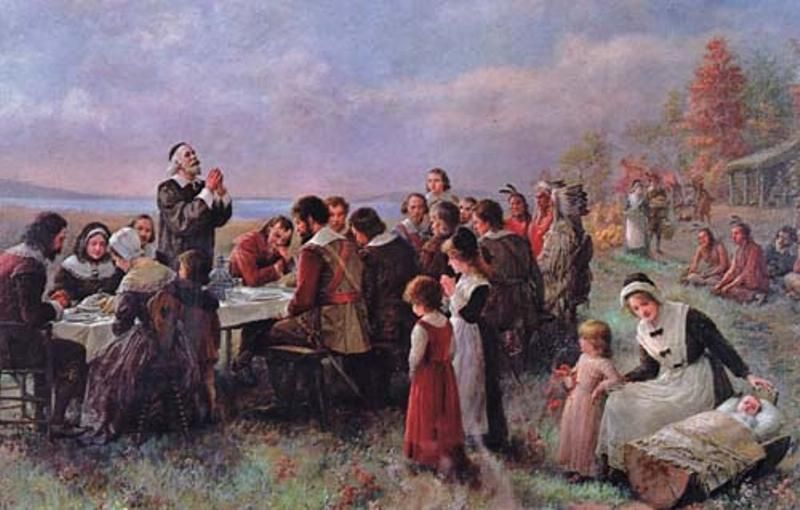
In the autumn of 1621, English settlers and Wampanoag people shared a three-day harvest feast after a successful harvest. The Wampanoag, led by their sachem Massasoit , joined the colonists for the celebration. Sachem refers to his role as the chief of the Wampanoag Confederacy. The title “Massasoit” itself is an honorific that means “Great Sachem”. The meal included venison, fowl, fish, and vegetables. While this event is widely considered the origin, many of the modern traditions are fictional, and it was not called “Thanksgiving” at the time.
The relationship between colonists and Native Americans was often violent and marked by conquest. For example, a Thanksgiving proclamation in 1637 celebrated the English settlers’ victory over the Pequot tribe, a victory that involved a massacre of Native Americans. Many Native Americans view Thanksgiving as a symbol of their oppression, which includes the theft of land, forced enslavement, and the destruction of their cultures. The 1621 feast was held on Wampanoag land, and many Wampanoag people today observe a National Day of Mourning to remember the genocide experienced by Native Americans.
Thanksgiving was not a national holiday for centuries, with various colonies and states declaring their own days of thanks. In 1863, President Abraham Lincoln declared a national Thanksgiving Day to be held annually in November, during the Civil War. Over time, the holiday has become a symbol of unity, family gatherings, and feasting, with traditions such as parades and football games.
Historians highlight Thanksgiving’s meaning through figures like Theodore Roosevelt, who emphasized that “True homage comes from the heart as well as from the lips and shows itself in deeds,”
Along with Abraham Lincoln (in his 1863 proclamation), who called for gratitude for “deliverances and blessings” while asking for the nation’s wounds to be healed.
While the history of Thanksgiving is complex, one of the most tangible ways it has evolved is through the food we eat today.
Let’s start with the star of any family’s tables for Thanksgiving, the Turkey. The tradition of eating roast turkey for Thanksgiving was popularized by author Sarah Josepha Hale, who featured it in her writings and lobbied for a national Thanksgiving holiday, which President Abraham Lincoln established in 1863. While the first Thanksgiving feast likely did not center on turkey, the bird was an abundant and practical choice for large gatherings, eventually becoming a centerpiece of the modern holiday meal.
What about one of the most popular sauces, Cranberry sauce? The tradition of serving cranberry sauce on Thanksgiving originated with Native Americans who ate cranberries with meat, a practice later documented by early colonists. It became a more widespread Thanksgiving staple in the 19th century, boosted by the invention of canned cranberry sauce by companies like Ocean Spray in the early 20th century, which made it more convenient and widely available.
And for desert, Apple Pie? Apple pie is a modern Thanksgiving tradition, not a colonial one, becoming a symbol of American patriotism during and after World War II, and its association with Thanksgiving grew through its promotion in influential media like magazines. While colonists brought apple recipes with them, the iconic apple pie we know today was developed by immigrants, particularly Dutch and German ones who introduced better pie-crust techniques, and its status as a staple dessert was solidified in the 19th century.