







Mamdani’s election as New York City’s mayor marks a historic moment in the city’s political landscape, reflecting both demographics and the influence of immigrant communities in one of the world’s most diverse cities. His victory is significant on multiple fronts: he is the first Muslim mayor of New York City, the first South Asian to hold the office, and one of the youngest mayors elected in modern times. These milestones are not just symbolic; they represent a shift toward more inclusive representation in a city that has long been a melting pot of cultures, ethnicities, and backgrounds
Mamdani’s identity as an immigrant and a South Asian New Yorker was central to his campaign and deeply connected to his political journey. Long before he ran for City Hall, Mamdani was active in supporting immigrant communities, particularly those facing economic hardships. He rose in 2021 when he joined New York City cab drivers on a 15-day hunger strike to protest the crushing debt many drivers faced. This act with a largely immigrant workforce demonstrated his commitment to addressing the struggles of everyday New Yorkers who often go unnoticed in political discourse.
“If I ever was to pick up Mamdani, his ride would be on the house due to what he’s done for us,” cab driver Kai Mei tells us.
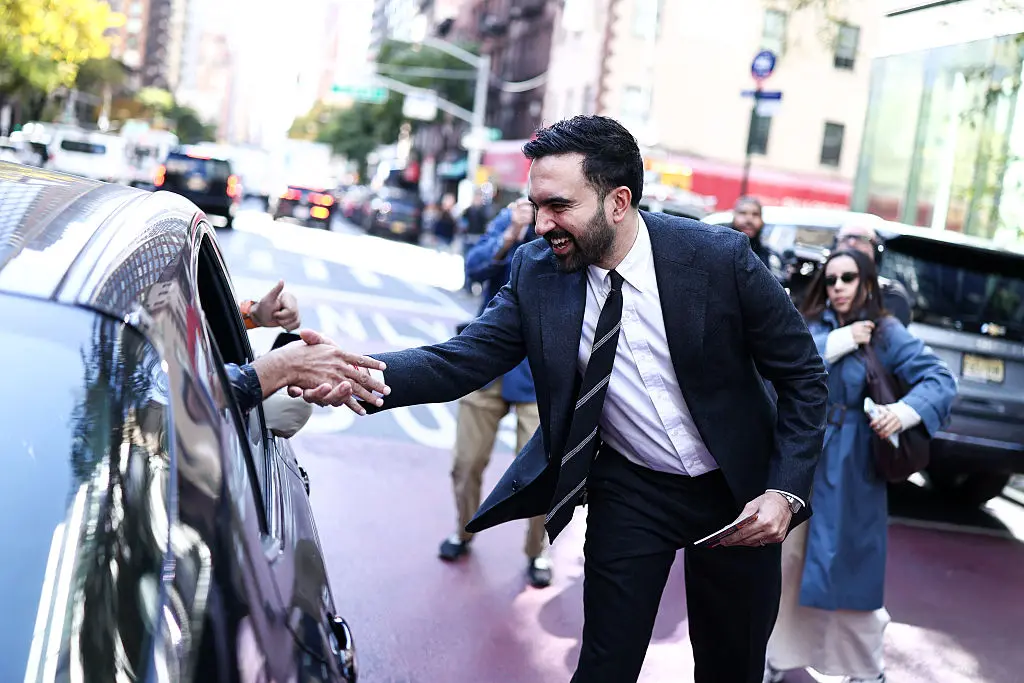
The cab driver community, which includes thousands of South Asians, was among Mamdani’s fiercest supporters His campaign strategically engaged with this group, recognizing their vital role in the city’s economy and culture. One memorable moment came during the final days of the campaign when Mamdani visited LaGuardia Airport’s taxi stand at midnight, catching drivers at the shift change. His message, “Without the night shift, there is no morning,” he deeply understands these workers and symbolizes his understanding of the city’s relentless pace and the people who keep it moving.
“They are both very poweful people,” June Rice says about Mamdani and his wife.
Mamdani’s victory also brings a new dynamic to the role of New York City’s first lady. His wife, Rama Duwaji, is an artist of Syrian descent who was born in Texas and moved to New York City to complete her master’s degree in illustration. At 28, she will be the first member of Generation Z to serve as the city’s first lady, Interestingly, Duwaji chose not to participate in traditional campaigning alongside her husband, and it remains unclear what role she will play in his administration. Her presence, however, adds a fresh and youthful perspective to the city’s leadership, potentially signaling a new era of engagement with younger generations.
“It is really nice to have someone understand us and not be against a more diverse population,” Samantha Santiago explains how she feels .
Mamdani’s campaign was inspired by a strong movement that emphasized the importance of immigrant communities and working-class New Yorkers. His background as an immigrant himself helped him connect authentically with voters who often feel marginalized in political processes, This connection, combined with his youth and fresh perspective, brought energy and hope to a city eager for change. Supporters see him as a leader who understands the complexities of immigrant life and is committed to addressing issues like affordable housing, economic opportunity, and immigrant rights.
“This is taking away from our work time and pay not helping with the diversity,” Critic Sam Jones stresses.
However, as with any new leader, Mamdani’s election also brings challenges and concerns. Some critics question how his policies will balance the needs of New York City’s diverse population,, which includes not only immigrants but also long-time residents and various socioeconomic groups. Others express caution about his relative youth and limited political experience, wondering how he will navigate the complexities of governing a city as large and multifaceted as New York.
Despite these concerns, Mamdani’s election represents a significant shift in New York City politics. It reflects a broader trend toward greater inclusivity and recognition of the city’s diverse population. His plans and connections suggest he will prioritize improving the lives of immigrant communities and working-class residents, while also tackling broader citywide challenges. His success is a testament to the power of grassroots organizing and the importance of representation in politics.
Mamdani’s historic election as New York City’s mayor is more than just a milestone, it is a reflection of the city’s evolving identity and the growing influence of immigrant communities. His background, activism, and campaign strategy highlight the importance of connecting with and advocating for marginalized groups. As he takes office, many hope that his leadership will bring new energy and attention to the city’s most pressing issues, fostering a more inclusive future for all New Yorkers.
So in conclusion Mamdani may have won the election with both hate and love but he tries to keep the promise of bringing a more diverse population to New York.