






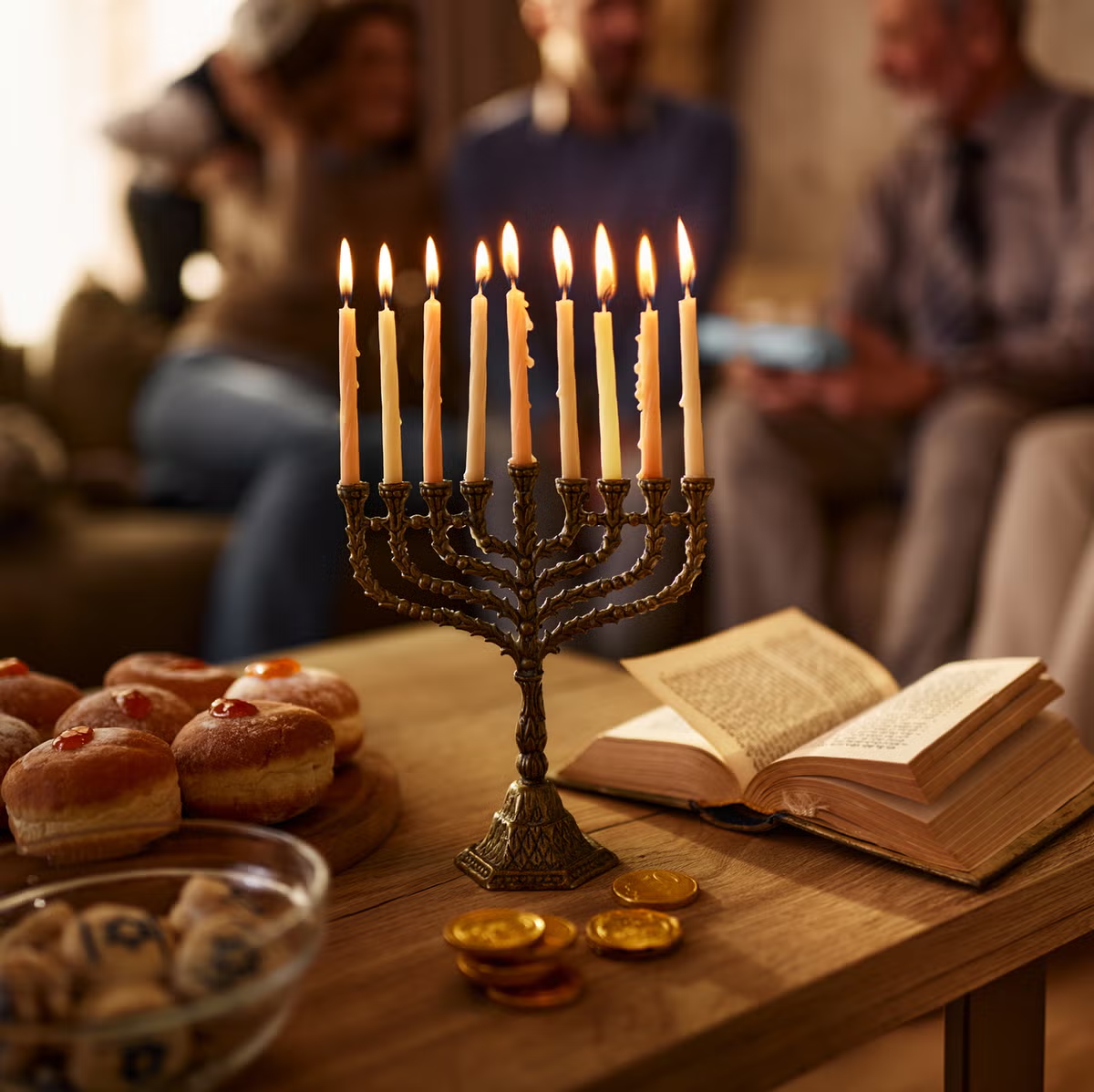
Hanukkah is a word we hear often this time of year but have no idea what it really means. If you dive deep into Jewish history, you learn Hanukkah is a festival, lasting eight days in December. Also known as Festival of Lights, it is a celebration of the rededication of the Holy Temple in Jerusalem.
The people of Israel were being oppressed by the Seleucids. These Syrian-Greek rulers attempted to force Israel to accept Greek culture and beliefs, but a small group of Jews rebelled. This rag tag army, led by Judah Maccabee, miraculously defeated one of the strongest armies on earth, driving Greeks from the land, and reclaimed the Holy Temple. Judah called on his followers to cleanse the Second Temple, rebuild its altar and light its menorah—the gold candelabrum whose seven branches represented knowledge and creation and were meant to be kept burning every night.
The Hanukkah wonder
According to the Talmud, one of Judaism’s most central texts, Judah Maccabee and the other Jews who took part in the rededication of the Second Temple witnessed what they believed to be a miracle. Even though there was only enough olive oil to keep the menorah’s candles burning for a single day, the flames continued flickering for eight nights, leaving them time to find a fresh supply. This astounding event inspired the Jewish people to proclaim a yearly eight-day festival. The first Book of the Maccabees tells another version of the story, describing an eight-day celebration that followed the rededication but making no reference to the miracle of the oil. The eight-day Festival of Lights marks an event dating to the second century B.C.E.
Other Versions of the Hanukkah Story
Some present-day historians offer a different interpretation of the Hanukkah account. In their view, Jerusalem under Antiochus IV had erupted into civil war between two camps of Jews: those who had integrated into the dominant culture that surrounded them, adopting Greek and Syrian customs; and those who were determined to keep Jewish laws and traditions, even if by force. The traditionalists won out in the end, with the Hasmonean dynasty—led by Judah Maccabee’s brother and his descendants—gaining control of the Land of Israel from the Seleucids and maintaining an independent Jewish kingdom for more than a century.
Jewish scholars have also suggested that the first Hanukkah may have been a delayed celebration of Sukkot, which the Jews had not had the chance to observe during the Maccabean Revolt. One of the Jewish religion’s most important holidays, Sukkot, consists of seven days of feasting, prayer and festivities.
Traditional Hanukkah Food
Traditional Hanukkah cuisine is composed of fried foods, savory meats, and sweet desserts. Most made or fried in oil to symbolize the original story.
The most common food is potato pancakes. A potato pancake is a shallow-fried pancake made from grated or mashed potatoes, mixed with ingredients like eggs, flour, and seasonings, and then pan-fried until golden brown. These pancakes, which vary by region and culture (such as the German Kartoffelpuffer or Yiddish Lakte), are crispy on the outside and tender on the inside and can be served with sweet toppings like applesauce or savory ones like sour cream.
This year, Hanukkah starts at sundown on Sunday, Dec 14, and ends at night fall on Monday, Dec 22.